Why the small stuff rules here
Mabul sits on volcanic sand at the edge of the continental shelf, and that sand — dark, silty, apparently empty — is exactly the habitat the ocean's great weirdos prefer. Muck diving is the art of reading it: a lump that is a frogfish, a shell that walks, a flash of blue rings that means step back. Most of it happens between 3 and 20 metres, which is why every certification level gets the full show.
The residents
Flamboyant cuttlefish
A palm-sized cephalopod that walks along the sand and runs a living light show across its skin. The single most requested animal on the island.
Frogfish
Ambush predators disguised as sponges, fishing with a lure grown out of their own head. Mabul's artificial reefs are full of them.
Mandarin fish
Psychedelic colouring and a dusk mating ritual that lasts seconds — the shot every underwater photographer wants and most never get.
Blue-ringed octopus
Golf-ball sized, iridescent, and one of the most venomous animals in the sea. Look, photograph, never touch.
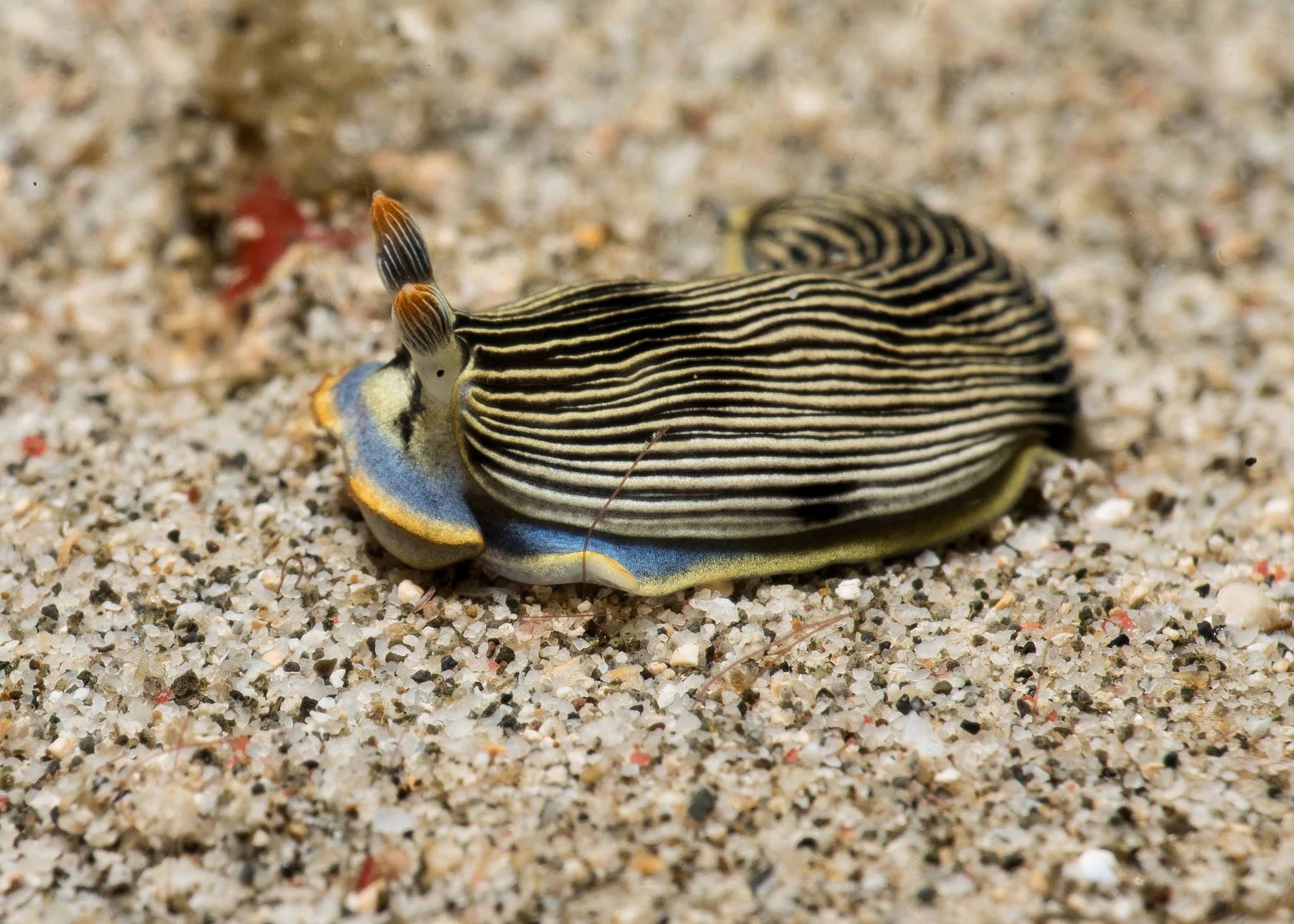
Nudibranchs
Sea slugs in colours evolution should not permit. Dozens of species on a good dive, and the reason macro lenses were invented.
Ghost pipefish
Drifting masters of disguise that impersonate leaves, crinoids and seagrass — usually in pairs, usually in plain sight.
Green turtles
The big exception on the macro list — resident grazers you will meet on nearly every dive, and often from your bungalow deck.
Finding them
Guides here find these animals daily and know individual territories — a good spotter is worth more than any camera upgrade. How the dives are structured is covered in the diving guide; if a species above is the reason for your trip, say so in the enquiry and the dive plan gets built around it.