The animal
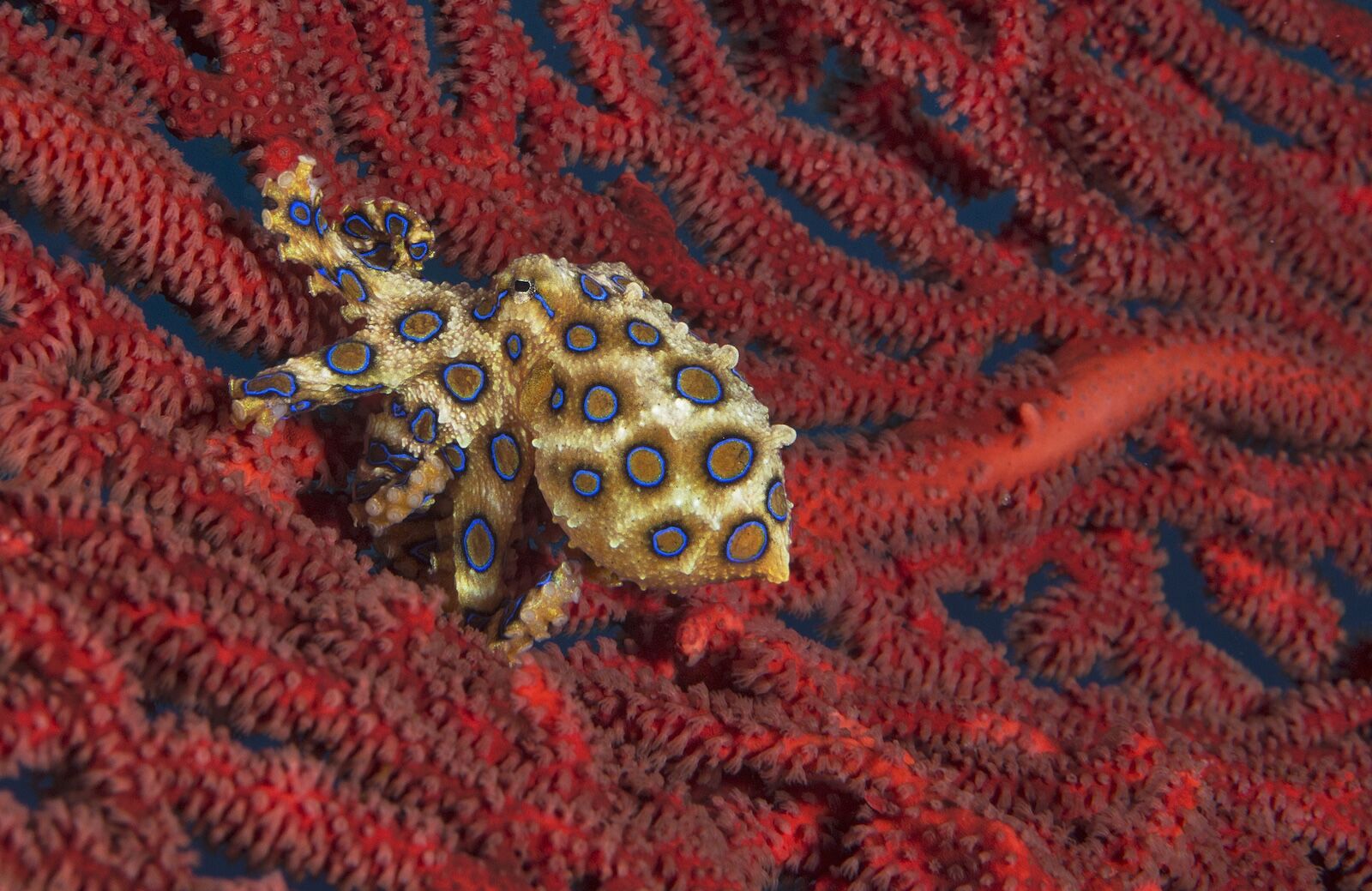
Blue-ringed octopuses are tiny — body the size of a golf ball, arms included barely a hand-span — and at rest they are beige, mottled, and effectively invisible on sand and rubble. The famous rings are a threat display: when alarmed, iridescent blue rings flash across the skin as an honest warning. The venom, tetrodotoxin, is among the most potent neurotoxins known and has no antivenom. The animal is not aggressive — bites on humans are vanishingly rare and essentially always the result of handling — but the rule is absolute: look, photograph, never touch, never crowd.
Where and when on Mabul
Sand, rubble, shells and debris in the shallows — classic muck terrain, which is why Mabul sightings are regular for guides who know the hunting grounds. They are active hunters of small crabs and shrimp, and a moving blue-ring is one of the most mesmerising things a macro diver will watch.
Photography and conduct
- The resting animal is the ethical shot — a full ring display means it is stressed, and the encounter should end, not escalate.
- Keep a still, low position and let it move; never block its path or herd it for the camera.
- Gloves are irrelevant to safety here; distance is the only rule that matters.
Related residents
The same flats host the flamboyant cuttlefish — the sand community's other celebrity. Full list: marine life guide.