The animal
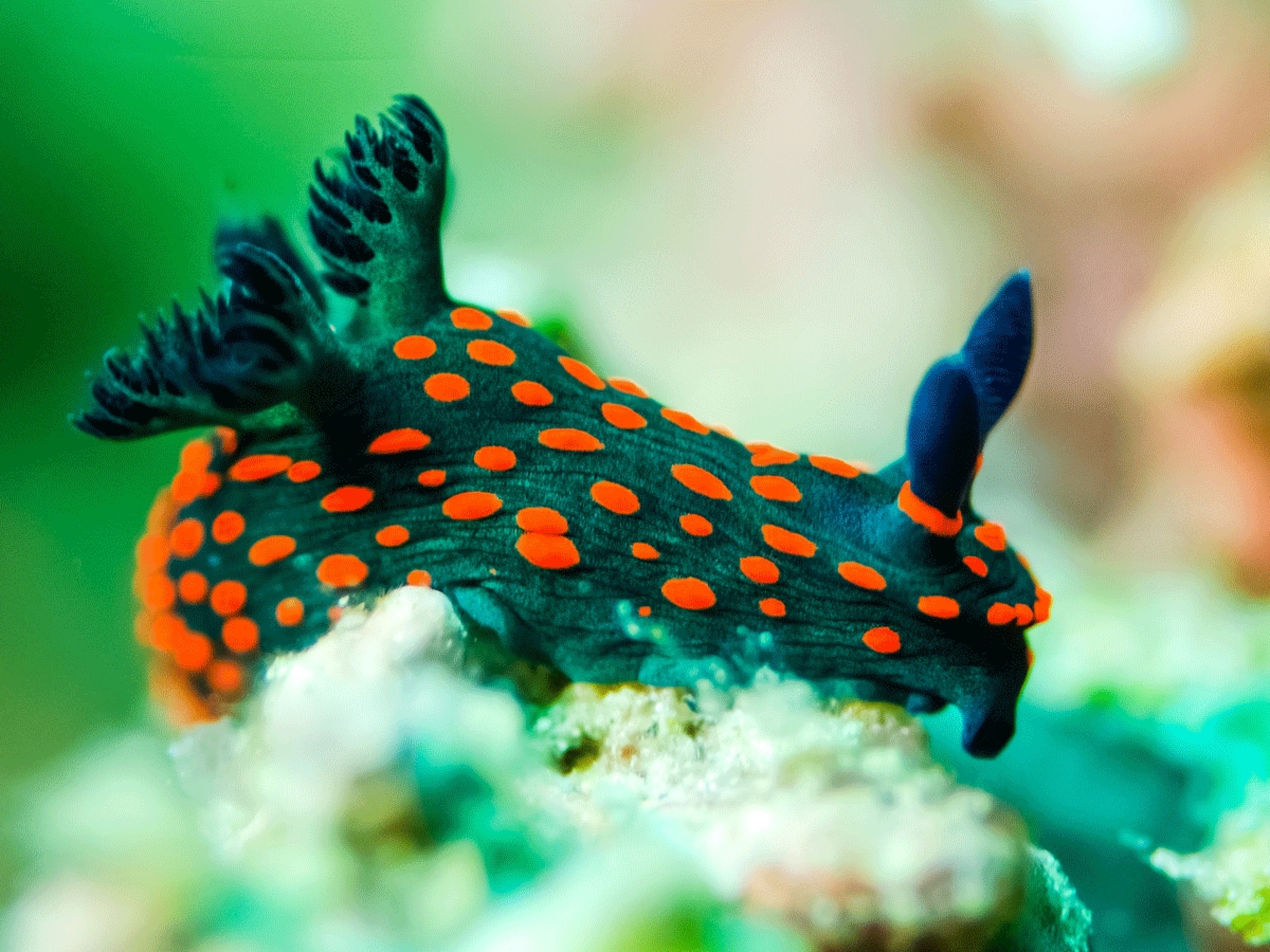
Nudibranchs — "naked gills," for the feathery gill plumes many carry on their backs — are shell-less marine slugs, and the colours are not decoration but chemistry: many species sequester toxins and stinging cells from their prey, and the loud patterns advertise it. The paired sensory horns up front (rhinophores) taste the water for food and mates. Most are thumb-sized or smaller; the spectacular ones are often smaller still.
Where and when on Mabul
Everywhere, honestly — which is the point. Sand slopes, rubble, seagrass edges, sponge-covered structures: each habitat carries its own species mix, from bold chromodorids to sand-dwelling specialists to species most divers have never seen in a book. The regional diversity is enormous, and Mabul's habitat variety inside one small island is why single dives here produce double-digit species counts for sharp-eyed divers.
Finding and photographing
- Slow down to a crawl — nudibranch diving is measured in metres per dive, not distance covered.
- Scan hydroids, sponges and tunicates: nudibranchs sit on their food.
- The rhinophores-forward, gills-sharp portrait is the classic composition; shoot at eye level, not top-down.
- Guides here maintain a running mental map of what is where — tell them your wishlist genus and watch them deliver.
Related residents
Sharing the slow lanes: the ghost pipefish and the ambush-artist frogfish. Full list: marine life guide.