The animal
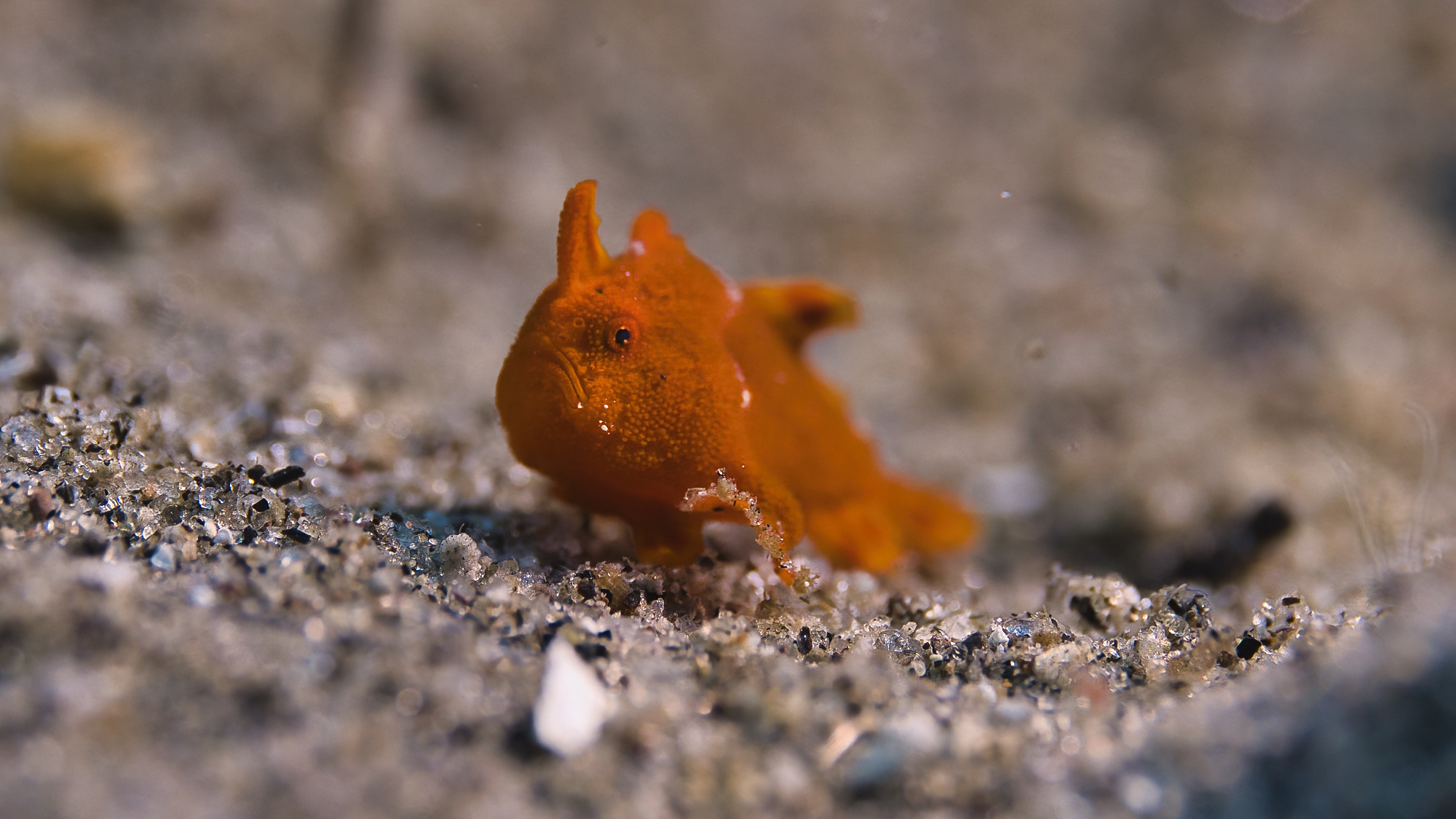
Frogfish are anglerfish, and the family gimmick is all there: the first dorsal spine has evolved into a rod (the illicium) tipped with a lure (the esca) that the frogfish twitches like live bait above its mouth. When something comes to investigate, the strike is one of the fastest feeding motions ever measured in a vertebrate — the mouth expands and engulfs prey in milliseconds. They barely swim, walking instead on pectoral fins that work like limbs, and their camouflage — sponge textures, algae tufts, colour-matching over weeks — is good enough that most divers have swum past dozens without knowing.
Where and when on Mabul
Mabul's artificial reef structures and sponge-encrusted platforms are frogfish paradise: hard vertical surfaces, sponge cover, and steady traffic of small fish. Painted and giant frogfish are the classic sightings, from thumbnail juveniles to fist-sized adults. Guides usually know exactly which sponge the current residents are sitting on — the animals may hold a spot for weeks.
Spotting and photographing
- Search sponges of the same colour class — frogfish sit on their disguise, not near it.
- Look for the one thing camouflage cannot hide: the small, downturned, unmistakably grumpy mouth.
- A yawning frogfish is the trophy shot — patience through a whole dive sometimes buys it.
- Do not touch or move them for a better angle; a relocated frogfish loses the ambush spot it may have held for a month.
Related residents
Also mastering disguise nearby: the ghost pipefish. Back to the full marine life guide.