The animal
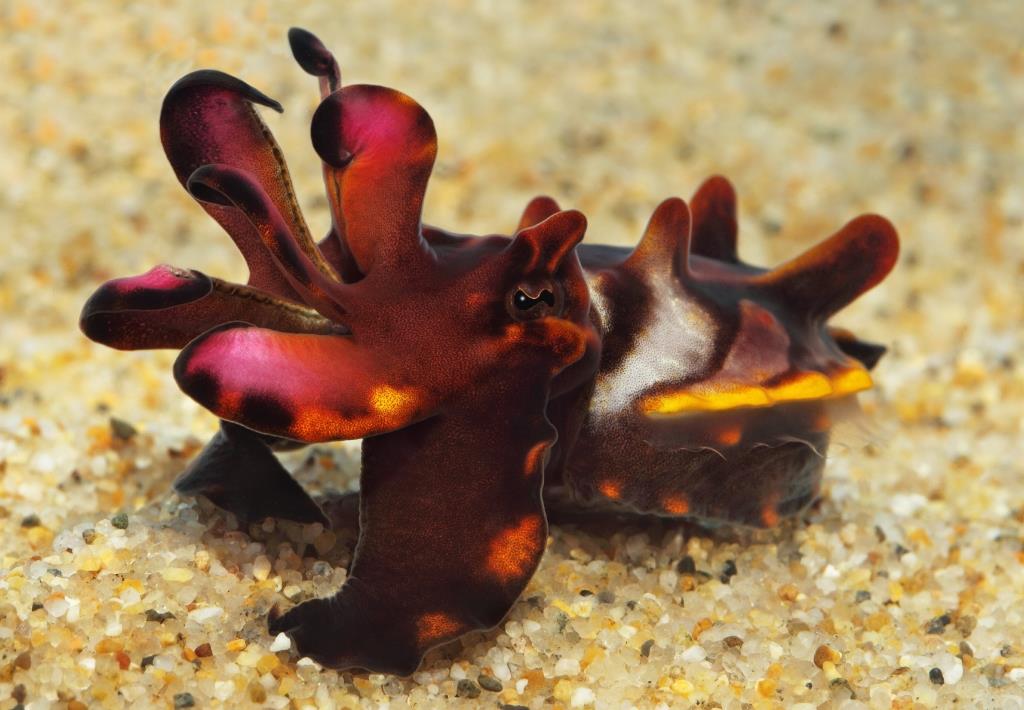
The flamboyant cuttlefish (Metasepia pfefferi) is small — adults are typically 6 to 8 centimetres — and it does something almost no other cuttlefish does: it walks. Using its lower arms and the flaps on its underside, it ambles across open sand like a tiny armoured pageant. The famous colour display is not constant; a resting flamboyant is a drab, sand-coloured lump. The rolling waves of colour switch on when it hunts, courts, or feels threatened — a warning, backed by flesh that is genuinely toxic.
Where and when on Mabul
Open volcanic sand and silt flats are its habitat — exactly the terrain Mabul's muck sites are made of. Daytime dives find them hunting small shrimp and fish; guides track known individuals for weeks. Eggs are laid singly under shells and crevices in the sand, and hatchlings emerge as fully-formed miniatures already flashing colour.
Photography notes
- Approach low and slow from the front quarter — a walking flamboyant that keeps walking is a comfortable one.
- The display peaks during hunting strikes; wait for the raised-arm posture before the tentacle shot fires.
- Shallow sand means long bottom times — this is a subject you can spend a whole dive with.
- Never provoke a display. A flashing, cornered animal is a stressed one, and the guides here rightly end encounters that push it.
Related residents
Sharing the same flats: the blue-ringed octopus and an honour roll of nudibranchs. The full list is in the marine life guide.