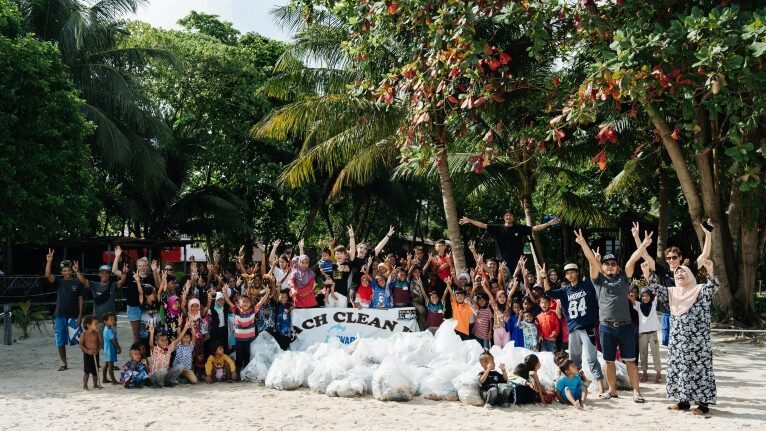
The waste reality
A small island with two thousand residents, a growing visitor flow and no municipal disposal system accumulates waste faster than it can export it — and some of it ends up in the water that everyone came for. Clean-up initiatives run, but the durable fix is upstream. Your share of it: bring a refillable bottle, refuse single-use plastic where you can, carry out what you carried in, and never leave anything on a beach or boardwalk on the theory that someone collects it.
The reef
Shallow sites and high traffic mean fins, hands and anchors do real cumulative damage. The code is simple: perfect your buoyancy before you perfect your photography, touch nothing, stand nowhere, take no shells or "souvenirs" living or dead, and wear reef-safe sunscreen or cover up — what rinses off swimmers settles on the coral beneath them. The conduct notes on every dive site page and species page are part of the same contract.
The people
Tourism money and village poverty share this island, and how you spend decides which side compounds. Spend in the village, tip the crews and guides, choose stays that employ locally, and read the Bajau Laut page before walking the boardwalks with a camera. Sweets and cash handed to children feel generous and do harm; custom at a family stall feels ordinary and does good.
The short version
- Refill, refuse, carry out — the island keeps what you leave.
- Buoyancy first, camera second; touch nothing on the reef.
- Money into the village; nothing into small outstretched hands.
- Ask operators the awkward questions — the good ones have answers.